Initiatives

The Legacy Bridge Program – Treasure Lebeteh Pya-Bari and ThankGod Isaac James
When a Child Excels in Primary School, Who Ensures the Story Continues?

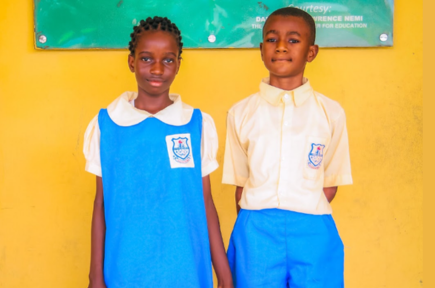
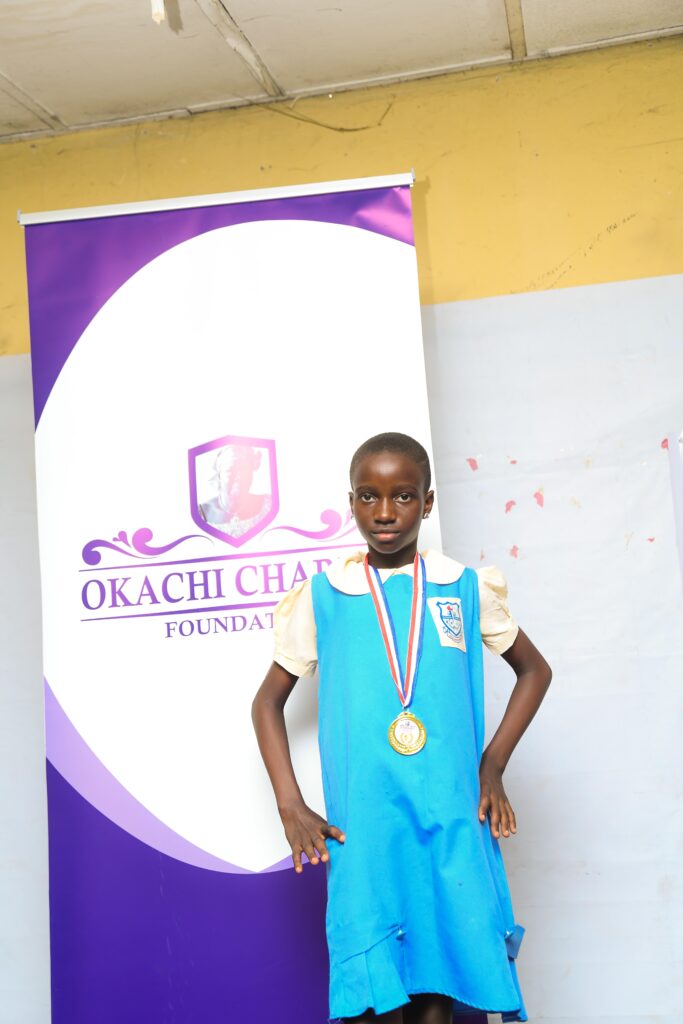
Featured Children: Treasure Lebeteh Pya-Bari and ThankGod Isaac James

There is a moment in every child’s education when one chapter ends and another begins. In Nigeria, the transition from primary to secondary school should represent progress: new subjects, greater independence, opportunities to develop talents, and the beginning of more serious academic and career decisions.

But for some families, this transition introduces difficult financial and educational questions. Where will the child attend secondary school? What will the tuition or school related expenses cost? Can the family sustain those costs across successive terms? What happens if other household obligations become more pressing?

And what happens to a child who has already demonstrated remarkable promise if that continuity cannot be guaranteed The Legacy Bridge Program was established to help address this vulnerability.

Its purpose is to identify children who demonstrate exceptional academic ability, leadership, confidence, and character during primary school and support their progression into the next stage of education.

The initiative recognizes that academic excellence should not be treated as a completed achievement at primary-school graduation. It is the beginning of a much longer journey.

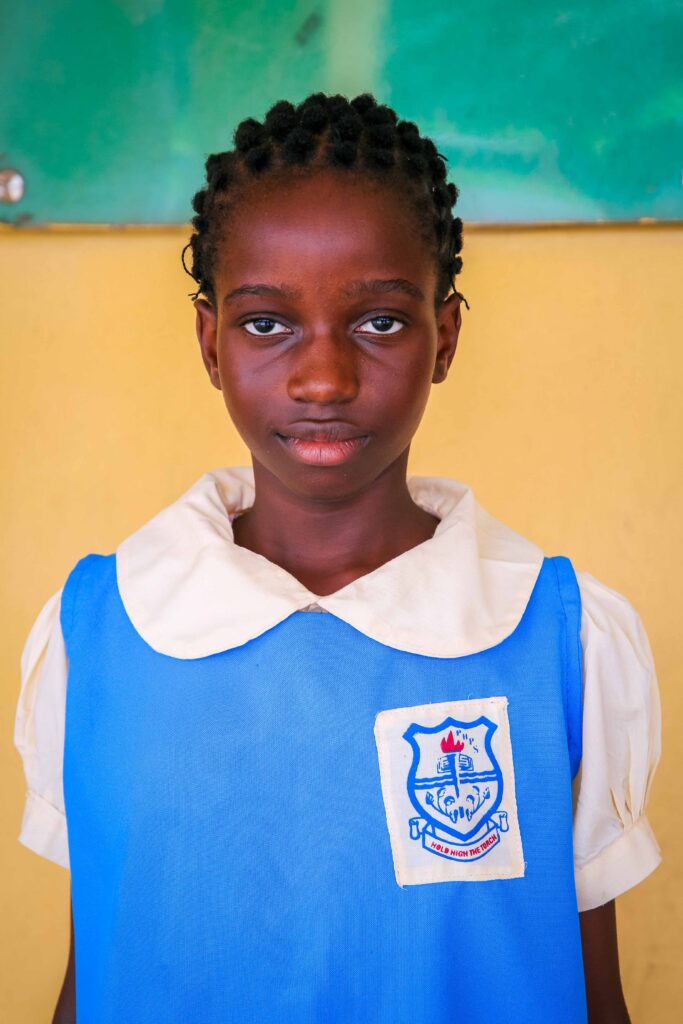
TREASURE LEBETEH PYA-BARI

The Girl Who Helped Us See the Importance of Giving Children a Voice

In 2024, when Treasure Lebeteh Pya-Bari was in Primary 4 at Port Harcourt Primary School, the Okachi Charity Foundation encountered a child whose confidence was difficult to overlook.

Treasure was articulate, observant, and willing to express herself. She demonstrated an ability to communicate her ideas with a level of confidence and composure that stood out during the foundation’s interactions with her.

What distinguished her was not simply that she could speak well.
It was the thoughtfulness behind her words, her willingness to participate, and the ease with which she engaged intellectually.

For OCF, the encounter raised an important question. How many children possess similar abilities but never receive the opportunity to demonstrate them?

In many conventional classrooms, success is measured primarily through written examinations and the ability to recall information.

Yet leadership, reasoning, debate, public speaking, and intellectual confidence are equally important qualities for future success.

A child who is given the opportunity to express an opinion, defend an argument, listen to opposing ideas, and think critically develops skills that extend well beyond the classroom.

Treasure’s confidence became one of the inspirations behind OCF’s Debate Initiative, introduced in 2025.

The initiative created opportunities for pupils to practise public speaking, develop arguments, strengthen communication, and engage with their peers in structured intellectual activities.

It was an important progression from simply observing a child’s potential to creating an environment in which such abilities could be developed across a wider group of students.

Treasure participated in the 2025 Debate Initiative and subsequently served as Head Girl of Port Harcourt Primary School.

Her leadership appointment provided further evidence of qualities the foundation had recognized during its earlier engagement.


Why Treasure’s Future Matters

A child can perform exceptionally throughout primary education and still encounter barriers during the transition to secondary school.
The demands increase, the costs can change, and the educational environment becomes more complex.

For Treasure, continuity matters because the next stage of her education should build on the confidence and academic abilities she has already demonstrated.

Her selection into the Legacy Bridge Program, formally communicated to her family on April 16, 2026, reflected the foundation’s intention to support that progression.

The goal is not simply to help Treasure remain enrolled. It is to provide the continuity, structure, educational guidance, and developmental opportunities that could help her become a confident, intellectually capable young woman.

Someone who can communicate effectively, lead responsibly, and participate in the decisions that shape her community.

These are possibilities, not predetermined outcomes. Her future will be shaped by her own choices, educational experiences, and the opportunities available to her.

The Family Behind Her Achievement . Treasure’s story also brings attention to the responsibility carried by parents who are raising academically promising children.

Educational excellence does not eliminate the cost of raising a child. A family must still make decisions about school placement, daily expenses, transportation, books, uniforms, and future educational commitments.

For a household with more than one child, supporting each child’s academic development can become a complex financial and emotional responsibility.

The Legacy Bridge Program is designed to reduce uncertainty around educational progression by establishing planned support, defined responsibilities, and sustained engagement.

For a parent, reliable educational assistance can mean more than help with an invoice.

It can create the confidence to plan beyond the immediate school term.

For Treasure, the intended benefit is the opportunity to continue developing without avoidable interruptions caused by gaps in educational resources.

Her story demonstrates why early recognition must be accompanied by long-term thinking.

Treasure did not need OCF to give her a voice. She already had one. What she needed was for that voice to be recognized and given opportunities to grow.
THANKGOD ISAAC JAMES

A Young Boy Already Demonstrating Academic Promise

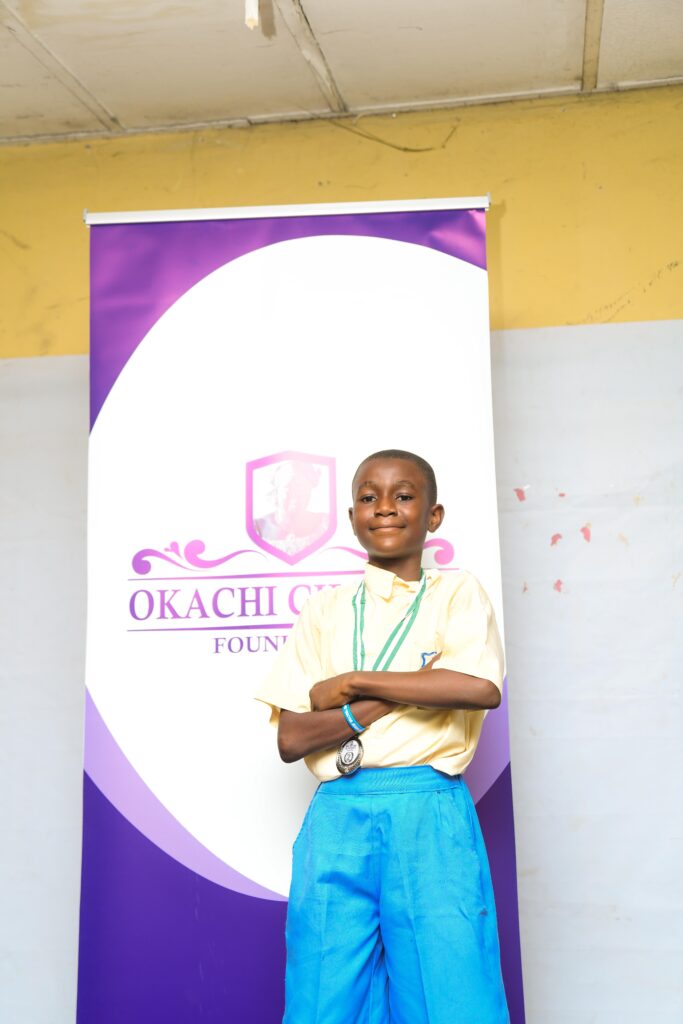
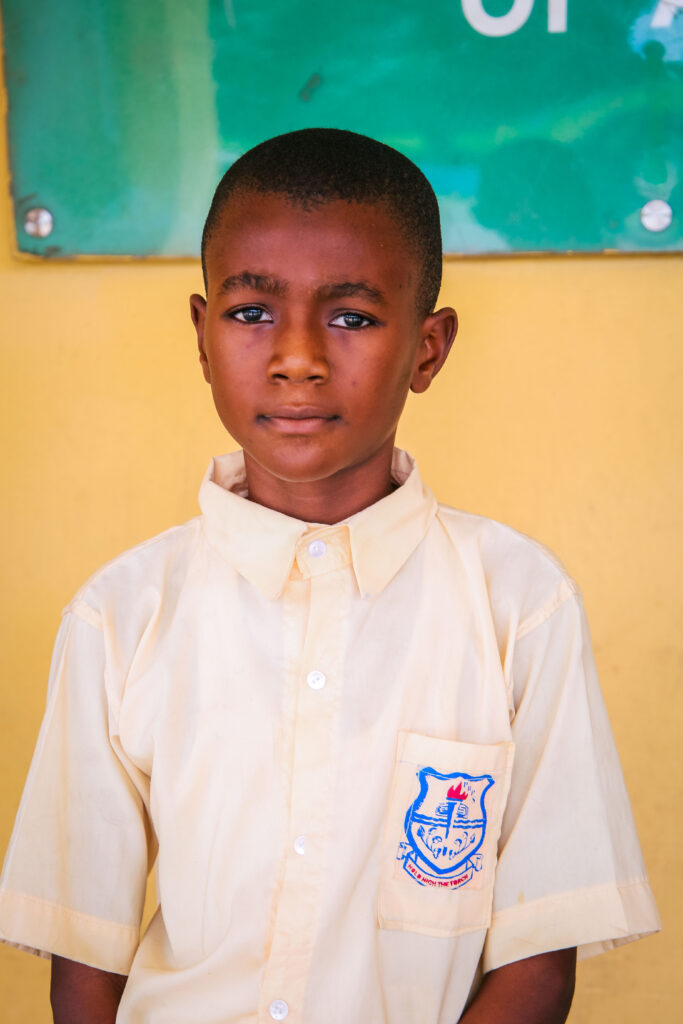
ThankGod Isaac James once walked the corridors of Port Harcourt Primary School as Head Boy. It was a position that placed him among the student leaders of his school and reflected the responsibility and leadership expected of him.

But completing primary school introduces a new test.

Can a child who performed well in a familiar environment continue to distinguish himself when surrounded by new teachers, new subjects, and a much larger group of competitors? For ThankGod, the early signs are encouraging.

After leaving Port Harcourt Primary School, he enrolled in JSS1 at Total Victory College, a private secondary school in Ogonabary, Rivers State.

During a recent follow-up, OCF’s team re-established contact with his family through the assistance of Mr. Abiye, the principal of his former primary school.

The conversation revealed an important academic achievement.

ThankGod placed top of his class in his most recently reported school results. This is a notable performance during the early stage of secondary education.

It provides evidence of continued academic strength following his transition from primary school.

While one examination result cannot predict an entire educational future, it gives a meaningful indication of his ability to adapt, compete, and perform in a different learning environment.

A Future Mechanical Engineer?

During the conversation, ThankGod was asked about his career interests.

His answer was mechanical engineering. He explained that he was inspired by how things are done and made. There is something valuable in that answer.

Before a young person fully understands the technical demands of a profession, curiosity often provides the first connection to it.

An interest in how machines work can become a starting point for learning about mathematics, physics, mechanics, design, and practical problem-solving.

For ThankGod, this creates an opportunity to connect his academic education with his developing interests.

Exposure to engineering professionals, age appropriate science activities, technical demonstrations, and practical learning could help him understand what the profession involves. It is too early to know whether he will ultimately become a mechanical engineer. But it is not too early to take his curiosity seriously.

Why His Story Matters to the Legacy Bridge Program

ThankGod illustrates an important principle: educational support should not end when children leave the schools where a foundation first encountered them.

Their progress deserves continued attention.

The foundation’s decision to reconnect with his family demonstrates the value of maintaining relationships with former pupils, even after they move into different educational environments.

His current academic success was reported by his family and will be strengthened by obtaining the corresponding school records.

His formal program support arrangements will also need to be documented.

Together, Treasure and ThankGod demonstrate why educational continuity should be treated as an ongoing responsibility rather than a one-time intervention.

Treasure represents the importance of identifying and nurturing leadership and intellectual confidence.

ThankGod demonstrates the value of tracking academic performance after a major educational transition.

What the Legacy Bridge Program Means for Families

For parents, educational planning can be a source of pride and anxiety at the same time.

Watching a child achieve excellent results is deeply encouraging. But those results can also increase the importance of securing the next opportunity.

The Legacy Bridge Program is intended to provide a more dependable pathway through this transition.

Where financial and educational support is formally approved, it can ease school-related costs, reduce the likelihood of interrupted schooling, and allow families to plan with greater confidence.

It can also create space for parents to think about their children’s longer-term development rather than concentrating exclusively on the next fee or school requirement.

For children like Treasure and ThankGod, continuity can make an important difference.
Their ability has already been demonstrated.
The question now is how that ability will be developed.