Why Investment in These Initiatives Matters
- by OCF
From Individual Opportunity to National Human Capital
Nigeria’s education challenges cannot be resolved by charitable organizations alone.
They require sustained public investment, effective education policy, accountable institutions, capable teachers, supportive families, and partnerships between government and civil society.
OCF’s initiatives are intended to complement these efforts by demonstrating what targeted, child-centered interventions can look like in practice.
There are three reasons this approach deserves serious attention.
1. Early Identification Can Prevent Potential from Being Overlooked
Schools encounter children with different academic, creative, leadership, and technical abilities every day.
But not all schools have the resources to provide individualized development opportunities.
Structured engagement, observation, and assessment can help identify children who may benefit from additional support.
Treasure’s story demonstrates how observing confidence and public speaking contributed to the development of broader debate opportunities.
The principle can be extended to other areas of learning.
2. Educational Continuity Protects Previous Investment
The value of primary education is diminished when children encounter avoidable barriers to continued learning.
Supporting educational transitions helps protect the time, resources, and effort already invested by families, teachers, communities, and public institutions.
The Legacy Bridge Program seeks to build continuity into the educational journeys of promising students.
3. Practical Learning Can Expand Future Possibilities
A child’s development should not be restricted to one definition of achievement.
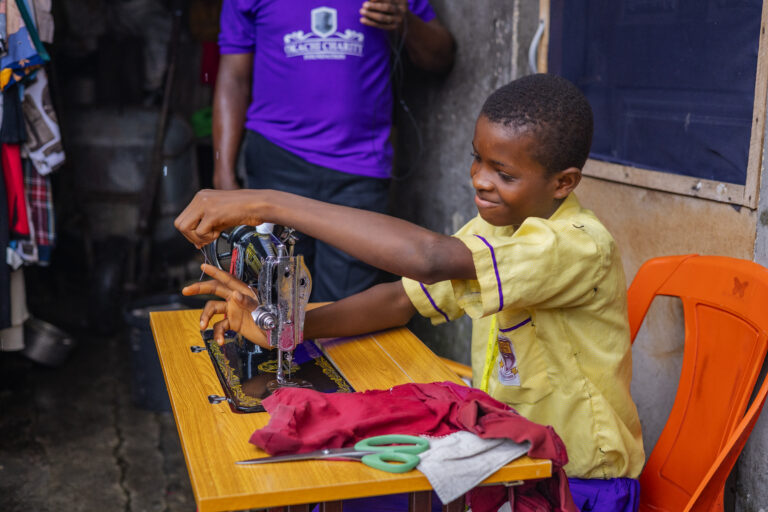
Providing appropriate tools, practical instruction, and mentorship can help children gain useful competencies while continuing their formal education.
The Forge Initiative offers a framework for supporting this development without prematurely assigning a child to a particular career.
For policymakers, these initiatives present opportunities to examine individualized student support, school-to-school transition monitoring, family engagement, and practical talent identification.
For donors and philanthropic partners, they offer clearly defined program areas in which financial support can be connected to specific activities and measurable outcomes.
For corporate partners and educational institutions, they create opportunities to provide mentorship, equipment, technical exposure, academic resources, and professional expertise.
Building a Responsible Partnership Model
As these initiatives develop, OCF aims to strengthen:
- Transparent selection and assessment procedures.
- Clear individual support plans.
- Direct documentation of educational expenditures.
- Regular engagement with parents and schools.
- Independent verification of academic and practical progress.
- Appropriate safeguarding and child-protection standards.
- Periodic reporting on expenditure, implementation, challenges, and outcomes.
This structure will allow future investment decisions to be guided by evidence rather than anecdote alone.
The purpose is not to present four children as a solution to Nigeria’s educational crisis.
It is to demonstrate how carefully designed interventions can begin responding to the needs of children who might otherwise be overlooked.